
In Bounds vs Off-Piste: What Americans Often Misunderstand in Verbier
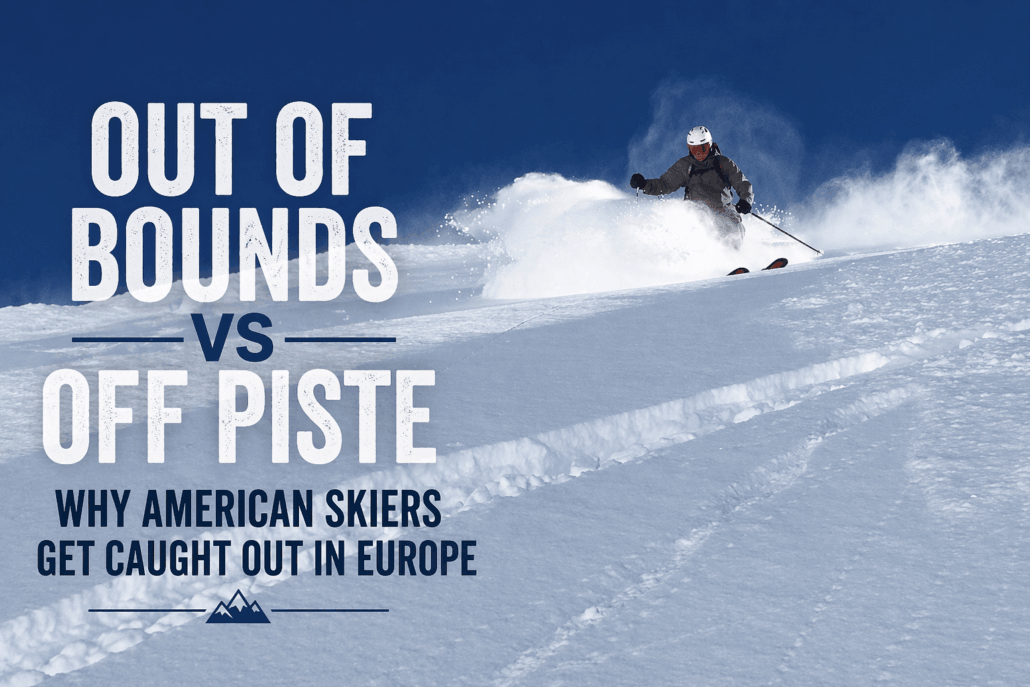
The biggest mistake American skiers make in Verbier? Assuming that if it’s accessible, it’s safe.
Why American Skiers Get Caught Out in Verbier (And How to Avoid It)
Every winter I see exactly the same thing happen in Verbier.
An American skier arrives after a fresh snowfall, rides up Attelas or La Chaux, looks across at an untouched powder field sitting right beside the piste and thinks, “Nobody has skied that yet.”
A few minutes later they are standing knee-deep in snow above unfamiliar terrain wondering how they ended up there.
The interesting thing is they haven’t ducked a rope, ignored a warning sign or deliberately gone looking for trouble. They’ve simply made one very American assumption, and it is probably the single biggest misunderstanding I see from first-time visitors to the Alps.
The Assumption That Catches People Out
Most North American ski resorts operate within clearly defined resort boundaries. Avalanche control, ski patrol and terrain management create an environment where skiers naturally assume that if a run is open, somebody has assessed the surrounding terrain and made it reasonably safe.
To leave that managed environment usually requires a conscious decision. You duck a rope, pass a boundary marker or deliberately head into terrain that is clearly marked as outside the ski area.
The message is simple and easy to understand.
Inside the boundary is managed. Outside the boundary is your responsibility.
Many American skiers arrive in Verbier expecting exactly the same system because that is what they have known for years. The problem is that the Alps generally work very differently.
Europe Works Differently
In Verbier, as in much of Europe, the resort’s primary responsibility is the marked pistes. Once you leave those pistes, even by only a few metres, you are often outside the controlled environment.
There may be no rope. No warning sign. No fence. No ski patroller standing there telling you to turn around.
Instead, there is often a beautiful powder field that looks like a natural extension of the ski area.
To somebody who has grown up skiing Colorado, Utah or British Columbia, it can look exactly like in-bounds powder.
But it isn’t.
That distinction catches a surprising number of visitors out every winter.
The Verbier Trap
What makes Verbier particularly deceptive is how accessible so much of the off-piste terrain appears.
From the lifts you can see powder fields stretching away in every direction. You can watch skiers making turns directly beneath the chairlifts. Around Attelas, Tortin and the bowls visible from Mont Gelé, the terrain often looks like a seamless continuation of the piste network. In reality, areas such as Tortin are classic examples of terrain that can appear deceptively straightforward while still demanding good judgement, the right conditions and an understanding of mountain hazards. I explored this in more detail in my article on why many visitors underestimate Tortin.
Then there are the tracks.
Visitors see dozens of existing tracks crossing a slope and assume somebody has checked it, or that it must be safe because other people have already skied there.
Unfortunately, tracks tell you very little. They simply tell you that somebody else went first.
Every winter there are visitors who discover that difference the hard way.
The Mindset Shift
One of the biggest differences between skiing in North America and skiing in the Alps is not technical ability, equipment or even avalanche knowledge.
It’s mindset.
European skiers generally don’t assume the mountain has been made safe for them once they leave the piste. They understand that skiing off-piste is an active decision that comes with additional responsibility.
They think about avalanche conditions. They look at visibility. They consider how weather has changed during the week and how that affects the snowpack. Most importantly, they recognise that responsibility has shifted from the resort to them.
That change in thinking is often more important than any avalanche transceiver or safety gadget.
Why Skiing With a Local Makes Such a Difference
This is one of the reasons I often recommend that visitors spend at least a day with a high-level local instructor when they first arrive in Verbier. A good day of Verbier ski lessons often teaches visitors far more about the mountain than a week of exploring alone.
People sometimes think they are simply hiring somebody to improve their technique, but the real value often goes far beyond that.
A good instructor helps you understand how the mountain works. They know which slopes are skiing well, which areas are best avoided, where the snow has been preserved and how conditions have evolved over the previous days.
They help you make better decisions while also helping you become a better skier.
Most visitors are amazed by how much terrain suddenly opens up once somebody explains where to go, when to go there and what to avoid.
Verbier is a huge mountain and it can take years to really get to know it.
Ski Instructors and Off-Piste Skiing in Verbier
Another surprise for many visitors is that independent ski instructors in Verbier can legally take clients off-piste and ski touring, provided they hold the appropriate Swiss qualifications and registrations.
Not all instructors working in the Alps have the same qualifications, permissions or local knowledge, which is why I always encourage visitors to do a little homework before booking.
The right instructor can make a huge difference to both your progression and your enjoyment of the mountain. Check out my Verbier off piste ski lessons page
What About Mountain Guides?
Mountain guides also play an incredibly important role in the Alps.
For glacier travel, mountaineering objectives, rope work, ski alpinism and more technical adventures, a mountain guide is often the perfect choice.
However, that is not necessarily what most visiting skiers are looking for.
Most people simply want to ski great snow, improve their technique, explore more of the mountain and do so with somebody who understands local conditions. For that type of experience, a highly qualified local instructor is often exactly the right fit.
Different mountain professionals provide different services and choosing the right one depends entirely on the experience you want from your trip.
My Advice for First-Time Visitors
If this is your first visit to Verbier, keep things simple.
Stay on marked pistes if you are unsure. Don’t assume that terrain beside a piste is controlled. Don’t blindly follow tracks and don’t confuse accessibility with safety.
One of the things that makes the Alps so special is the freedom they offer. The terrain feels vast, open and adventurous in a way that many visitors have never experienced before.
That freedom is part of the magic, but it also comes with responsibility.
The Bottom Line
The biggest mistake American skiers make in Verbier is assuming that a lack of ropes means a lack of danger.
In North America, resort boundaries often define safety. In Verbier, marked pistes generally define safety.
Understanding that one difference can completely change how you approach the mountain and will almost certainly make your trip safer and more enjoyable.
The good news is that once you understand how the Alps work, you’ll discover some of the most rewarding skiing anywhere in the world.
If you’re planning your first trip to Verbier and would like help making the most of the mountain, whether that’s improving your skiing, exploring some of Verbier’s legendary off-piste terrain or simply understanding how everything works, feel free to get in touch. You can learn more about my background, qualifications and private ski lessons in Verbier on the Roddy Willis homepage, or I can point you towards one of the elite independent instructors featured in Roddy’s Little Black Book.